The 7 most common mistakes when buying WPC decking
In short:
When buying WPC decking, it is important to consider more than just colour and price. The profile type, surface finish, board length, substructure, fastening system and actual material requirements should all be considered together before placing an order. This can help avoid unnecessary waste, missing components and problems during installation.
Mistake 1: Choosing based only on colour and appearance
Colour is important – after all, it has a major influence on the overall appearance of your terrace. However, it should not be the only factor when choosing your decking.
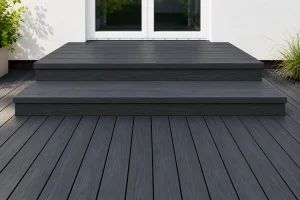
The profile type, dimensions, surface texture and material construction of the board also play an important role. For example, Classic WPC decking boards and co-extruded WPC decking boards differ in their surface construction. At the same time, both solid and hollow-core profiles can be suitable for different terrace projects.
For this reason, compare not only the colours but also the complete specifications of each decking board.
Mistake 2: Judging decking only by how it looks on screen
Product photos provide a useful impression, but they cannot fully reproduce how a decking board looks in real life. Screens, lighting conditions and cameras can all affect how colours and textures appear.
The feel and surface texture of a board are also difficult to judge from a photo alone.
If you are deciding between several options, it is therefore a good idea to view samples before ordering.
At Extrawood, you can order up to 5 WPC samples free of charge. Shipping of samples within Germany is also free.
Mistake 3: Assuming solid decking is always better
A solid decking board has a solid profile throughout, while a hollow-core board contains hollow chambers inside the profile. However, this does not automatically mean that a solid board is the better choice for every terrace.
Hollow-core profiles, for example, have a lower weight, while solid profiles do not have visible hollow chambers at cut edges.
The deciding factor is therefore not simply the profile type, but whether the specific decking board and planned terrace construction are suitable for your project.
Mistake 4: Calculating only the square metres of your terrace
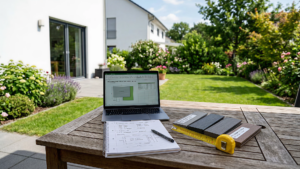
A terrace measuring 30 m², for example, does not simply require 30 m² of decking boards.
The actual quantity required depends on factors such as the dimensions of the terrace, the laying direction, the selected board length and the amount of cutting waste.
The arrangement of the boards can also make a significant difference. Depending on the layout, the number and position of board joints and the amount of waste can vary.
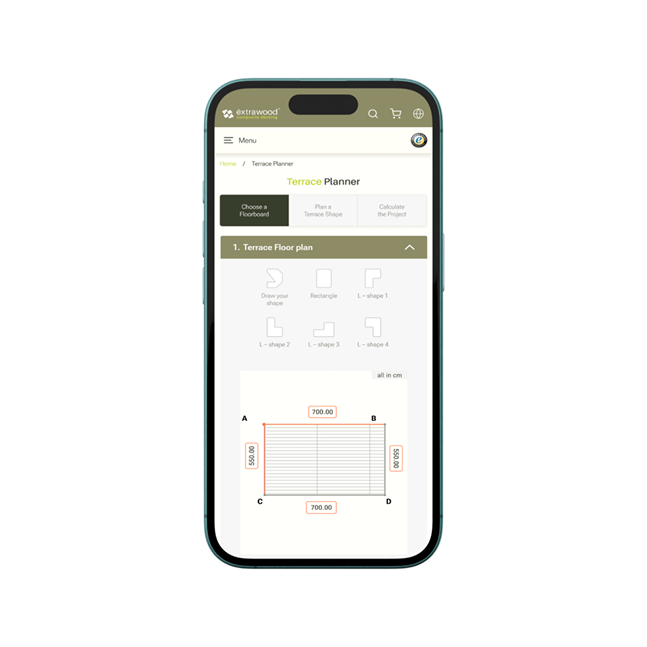
With the Extrawood Terrace Planner, you can first select your preferred decking board and then enter the shape and exact dimensions of your terrace. The planner generates different calculation and layout options that you can compare.
Mistake 5: Planning the substructure and fastening system later
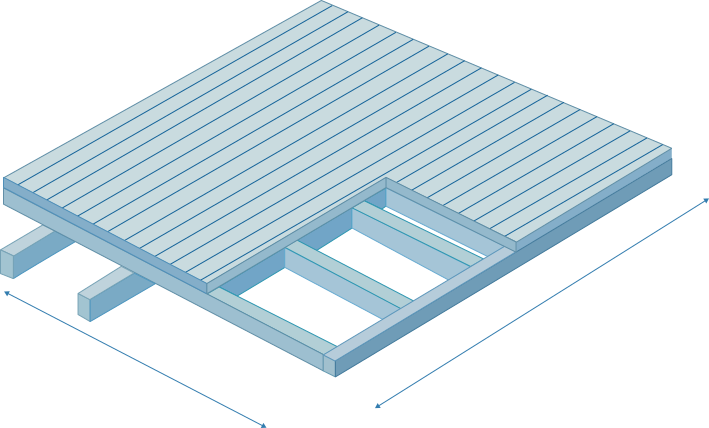
Decking boards are only one part of the complete terrace construction. Before purchasing the boards, you should also determine which substructure and fastening system are suitable for the selected decking.
This includes the required spacing of the substructure as well as the necessary WPC fastening clips and stainless steel start and end clips.
Depending on the surface underneath the terrace and the required construction height, additional components such as height-adjustable pedestals may also be useful.
If these components are considered only after purchasing the decking boards, you may end up with missing materials or a construction that is not suitable for the selected decking.
Mistake 6: Choosing the board length without considering the terrace dimensions
The length of the decking boards should not be selected only according to which option is easier to transport.
Whether 3 or 4 metre boards are the better choice also depends on the dimensions of your terrace and the planned laying direction.
Choosing a suitable board length can help optimise the arrangement of board joints and reduce unnecessary waste. It is therefore worth comparing different layout options before ordering the final quantities.
Mistake 7: Comparing only the price per square metre
The price of the decking boards alone does not show how much the complete terrace will cost.
In addition to the decking boards, the complete construction also requires a substructure and suitable fastening components. Depending on the construction, additional components such as adjustable pedestals or finishing profiles may also be required.
A meaningful price comparison should therefore consider not only the price per square metre of the decking board, but the material requirements for the entire terrace project.
The Terrace Planner calculates the main components required for your terrace and displays the corresponding material costs. Optional accessories can then be added as needed.
How to avoid common mistakes before ordering
First, choose a decking board that suits your requirements and preferred design. If possible, check the colour and surface using a sample, and then plan the complete terrace construction, including the substructure, fastening system and any additional accessories you may need.
With the Extrawood Terrace Planner, you can compare different layout options, calculate the required materials and create your personal terrace plan as a PDF.
Your plan can also be saved and accessed again later using the corresponding code and PIN. Once everything is ready, the calculated products can be added directly to your shopping cart.