WPC or wood – which material is right for your terrace?
In short:
Wood and WPC are two popular materials for decking, but they differ significantly in terms of maintenance, appearance and material properties. Wood stands out for its natural character but requires regular care. WPC is easier to maintain and does not need to be regularly painted or oiled. Which option is right for your terrace therefore depends mainly on which characteristics are most important to you.
What is the main difference between WPC and wood?
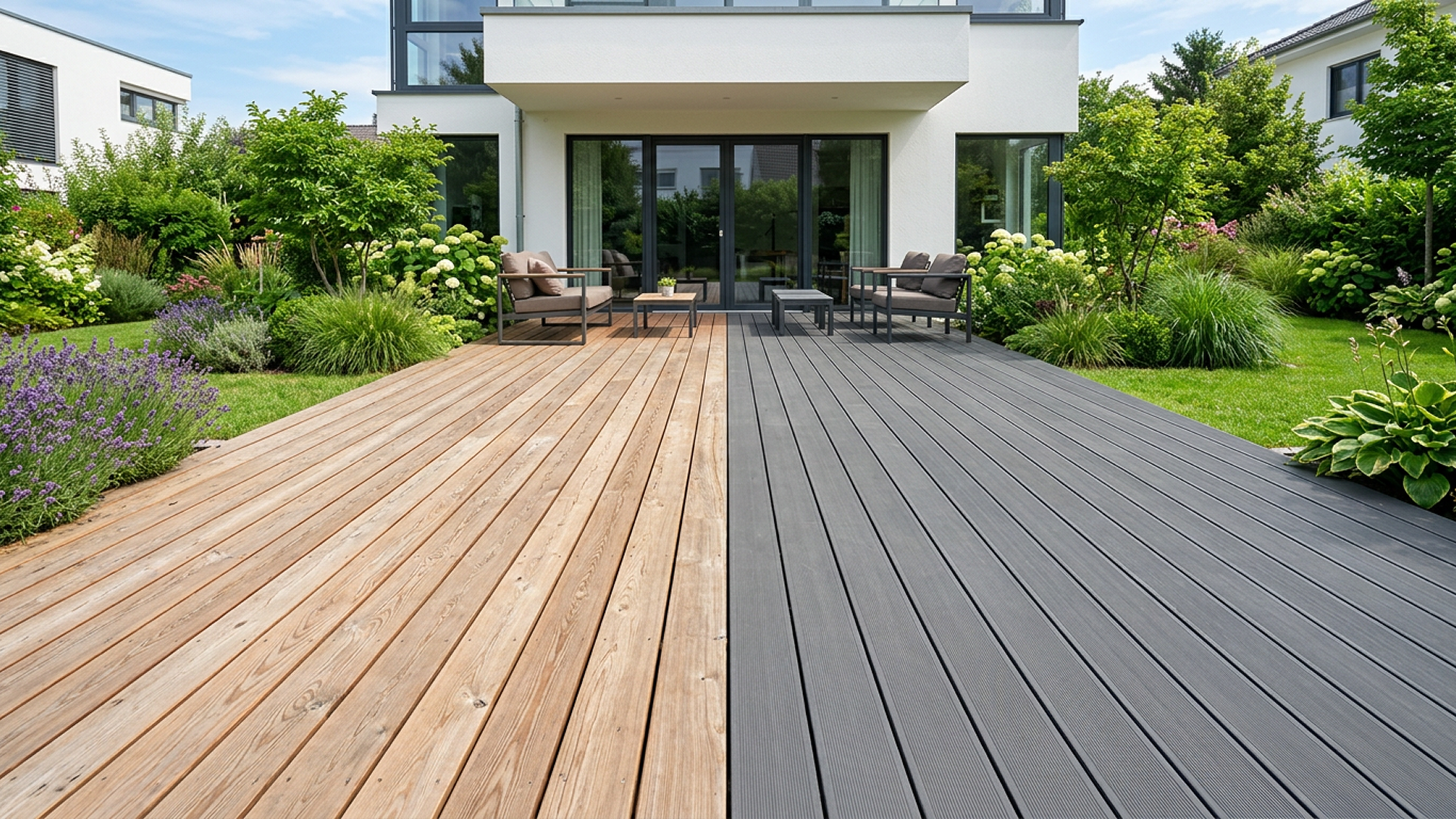
Wooden decking boards are made from a natural material. Their colour, grain and texture are determined by the type of wood used, giving each board its own individual appearance.
WPC stands for Wood Plastic Composite and is a composite material made from wood and polymer components. The combination of these materials makes it possible to produce decking boards with a more consistent appearance while reducing the maintenance typically associated with natural wood.
Both materials can be used for terrace construction. The choice is therefore less about one material being “good” or “bad” and more about which characteristics you expect from your terrace.
Appearance: natural wood or a more consistent look?
The particular appeal of a wooden terrace lies in its natural character. Grain, colour variations and changes to the surface are part of the material and make every terrace unique.
WPC decking boards, on the other hand, offer a more consistent appearance. Depending on the collection, different colours and surface finishes are available – from finely brushed or grooved surfaces to pronounced wood-grain finishes.
Modern WPC decking can closely resemble wood, but it remains a composite material. If you are looking specifically for the natural grain and ageing of real wood, wood is the obvious choice. If you prefer a more consistent appearance, WPC can be an attractive alternative.
Maintenance: one of the biggest differences
Wood changes when exposed to sunlight, rain and other weather conditions. Depending on the type of wood and the desired appearance, regular cleaning and maintenance may be required, as well as treatment with suitable care products when necessary.
WPC decking boards do not need to be regularly painted or oiled. For normal maintenance, water, a brush and, if necessary, a suitable mild cleaning product are usually sufficient.
However, WPC is not completely maintenance-free. Dirt, leaves and other deposits should be removed regularly, and the terrace should be cleaned when necessary.
How do the materials change over time?
A wooden terrace changes in appearance over time. Without appropriate surface care, wood can turn grey as a result of weathering and UV exposure. Some terrace owners deliberately choose this natural effect, while others prefer to maintain the original appearance.
The colour of WPC can also change over time due to UV exposure and weather conditions. This is a natural characteristic of the material and should be taken into account when choosing a colour.
The extent to which a material changes in appearance depends on the specific product, the location of the terrace and the surrounding conditions.
Splinters and surface
Depending on the type of wood, its age and the condition of the surface, natural wood can develop cracks or splinters. The surface should therefore be checked regularly and maintained as necessary.
WPC decking boards provide a more consistent surface and can be an attractive alternative for anyone who wants to avoid the typical maintenance requirements of a wooden surface.
Regardless of the material, a terrace surface can become more slippery when wet or covered with snow or ice. Regular cleaning and proper care of the surface are therefore important for any terrace.
What should you consider when it comes to moisture?
A terrace is permanently exposed to outdoor conditions, including rain, moisture and temperature changes. A properly designed construction is therefore important for both materials.
Water must be able to drain away reliably and standing water should be avoided. At the same time, sufficient ventilation of the construction should be ensured.
A suitable substructure and the correct spacing according to the installation requirements of the specific product are also important.
Not all WPC is the same
If you choose WPC, there are also different options within this product category.
At Extrawood, for example, you can choose between Classic WPC decking boards and co-extruded WPC decking boards from the Premium Series.
With Classic WPC, the surface is an integral part of the WPC material. Co-extruded decking boards have an additional protective polymer layer around the WPC core, making the surface less susceptible to moisture and stains and particularly easy to maintain.
There are also both solid and hollow-core profiles. The right WPC decking board should therefore not be selected based on colour alone.
Which is cheaper – wood or WPC?
There is no universal answer to this question. Both wood and WPC are available in a wide range of products and prices.
For a meaningful comparison, you should also consider more than just the price of the decking boards. The substructure, fastening system, accessories, cutting waste and potential future maintenance costs are all part of the overall cost.
A lower price per square metre for the decking board does not automatically mean that the complete terrace will be less expensive.
What about installation?
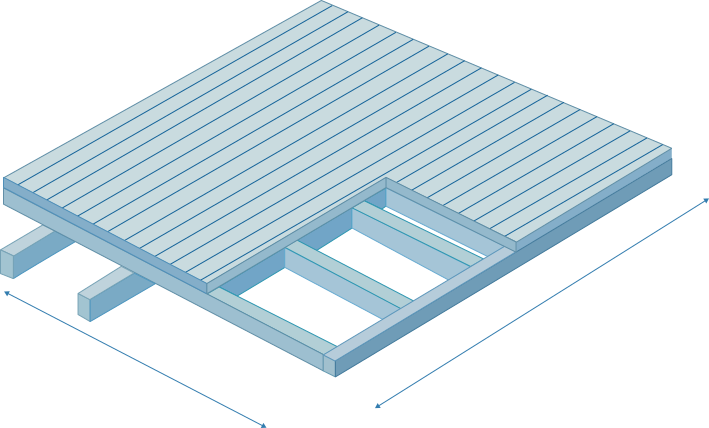
Both wood and WPC terraces require a suitable and carefully installed substructure.
With WPC, particular attention should be paid to the installation requirements for spacing, fastening, expansion gaps and ventilation. WPC reacts to changes in temperature and therefore requires sufficient room for expansion and contraction.
The exact requirements depend on the specific product and should be checked before installation begins.
Who is wood right for?
Wood can be the right choice if a natural material and individual wood grain are particularly important to you and you are prepared for the associated maintenance.
The natural changes that occur in the material over time can also be a deliberate part of the desired appearance.
Who is WPC right for?
WPC can be particularly attractive if you are looking for an easy-to-maintain terrace surface with a more consistent appearance and want to avoid regular painting or oiling.
With a choice of different profiles, colours and surface finishes, WPC decking can also be adapted to a wide range of design preferences.
WPC or wood – how do you choose?
Ultimately, the decision depends on your personal priorities. If natural character and the individual development of the material over time are most important to you, wood may be the right choice. If you value lower maintenance, a more consistent appearance and a wide choice of designs, WPC offers attractive advantages.
If you are considering WPC, we recommend not choosing the colour and surface finish based solely on product photos.
At Extrawood, you can order up to 5 WPC samples free of charge and compare the different decking boards in person. Shipping of samples within Germany is also free.